Candidates from Serbia
What European employers should know about the labour market, education system and documentation practice in Serbia.
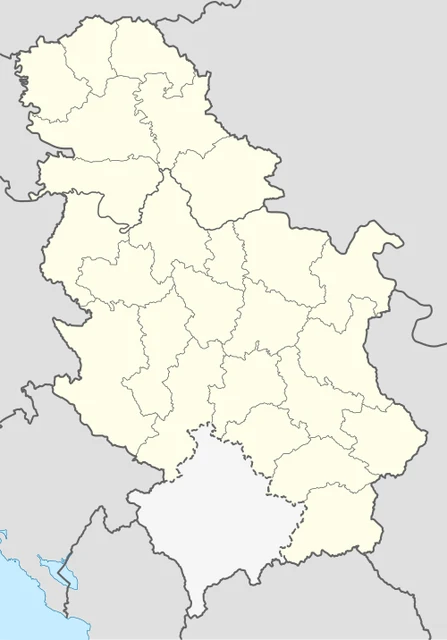

Country overview
Serbia has the largest labour market in the Western Balkans and the most diversified economy in the region. Automotive component supply, machine building, food processing, agriculture, road transport and a substantial information technology sector all employ significant numbers, which produces a broader spread of candidate profiles than smaller neighbouring markets.
The country hosts manufacturing operations of several international groups, so experience with European production standards, documented quality systems and shift-based work is comparatively common. For technical and industrial recruitment this often shortens the practical adaptation period.
Road transport is a long-established sector with extensive international route experience, which matters if you are recruiting professional drivers. Belgrade, Novi Sad and Niš also host a mature software services sector working with clients across Western Europe.
- Region
- Western Balkans, bordering Hungary, Romania, Bulgaria, Croatia, Bosnia and Herzegovina, Montenegro and North Macedonia
- Time zone
- Central European Time — full working day overlap with Germany and Austria
- Typical education route
- Secondary vocational and technical schools, plus universities in Belgrade, Novi Sad, Niš and Kragujevac
- Strong sectors
- Automotive supply, machine building, food processing, transport, information technology
- Distance
- Direct road and air connections to Central Europe
Relevant candidate categories
Professional categories most present in the labour market.
Education and vocational pathways
Secondary education includes three-year and four-year vocational and technical schools. Four-year technical schools produce profiles oriented towards maintenance, electrical work, mechanical trades and machining, often followed by employment in supplier plants.
Universities in Belgrade, Novi Sad, Niš and Kragujevac run engineering, medical, natural science and computing faculties with long-established programmes. Many follow Bologna structures; formal recognition in your country remains a separate administrative question for the competent authority there.
Because international manufacturers operate plants in the country, a meaningful share of candidates have worked inside documented quality systems and to European production standards — worth asking about explicitly, since it shortens onboarding when present.
Languages as an individual profile attribute
Language ability varies per individual. English is comparatively widespread in the IT and services sectors and among younger candidates; German is more common among candidates with previous work experience in German-speaking countries.
As everywhere on this site: define the required level by the communication that actually has to happen in the role, then test it. Never infer language ability from nationality or from the sector a candidate previously worked in.
Relevant industries
Industries where these candidates most often have experience.
Skills and qualifications to verify
Qualifications employers should verify.
- The certificate, the issuing school or faculty and the year of completion
- Whether the role is regulated in your country and requires formal recognition
- Documented work experience, including plant type and quality system exposure
- For drivers: licence categories, professional qualification and driver card status
- Practical skill through a task built around your own equipment or product
- Language level assessed against real communication needs in the role
Documentation considerations
Documentation considerations.
- Diplomas and certificates are issued by schools, faculties or accredited centres
- Translations and, where required, legalisation add lead time
- Recognition for regulated professions runs through authorities in the country of employment
- Driving licence recognition and exchange rules differ by country and category
- Confirm the work authorisation route before agreeing a start date
We do not publish fixed permit or visa timelines. Processing depends on the authority, the country of employment, the role and the individual case. Confirm current requirements and processing information with the competent authority before agreeing a start date.
Relevant professions
Profession pages relevant to this labour market.
How recruitment continues on Candidate Force
Balkan Candidate is where employers orient themselves. Candidate Force is where the recruitment process actually happens.
Explore profiles
Review available candidate profiles by professional category and see what the current talent pool actually contains before you commit.
Publish a job
Create a free employer profile and publish your vacancy with the requirements, location and start period that matter to you.
Receive applications
Applications arrive in one place instead of being scattered across email threads, job boards and spreadsheets.
Review candidate details
Compare qualifications, experience and language level, and shortlist the profiles that fit your role.
Continue recruitment
Move to contact and interviews through the plan that fits your hiring volume and internal process.
Related hiring guides
Frequently asked questions
No. Serbia is a candidate country for EU membership, so candidates from Serbia are third-country nationals for employment purposes in EU member states. The applicable authorisation route depends on your national rules and the role.
Industrial and technical profiles, professional drivers, automotive-related roles and IT profiles appear most consistently, reflecting the structure of the economy. Availability of any specific profile changes continuously, so check current profiles rather than planning around a general statement.
It is comparatively common because international manufacturers operate plants in the country, but it varies by employer and should be verified per profile rather than assumed.
Licence categories and validity, professional driver qualification status and the driver card. Recognition and exchange rules for non-EU licences vary by country and category, so confirm them with the competent authority before agreeing a start date.
The sector mix differs — Serbia has a stronger automotive supply, transport and IT presence — but the process discipline is the same: define the role precisely, verify documents, assess practically, and plan authorisation before committing to a start date.
See which profiles are currently available
Country context helps you plan. Candidate Force shows which candidate profiles are actually available right now.
Country information is general and for orientation only. Immigration, recognition and employment rules are set by authorities in your jurisdiction and must be confirmed there.