Candidates from the Western Balkans
Six Western Balkan countries plus Croatia, each with its own vocational system and industrial histories. Understanding the difference is what turns a broad "Balkan recruitment" idea into a realistic hiring plan.
The Western Balkans in this context means Bosnia and Herzegovina, Serbia, North Macedonia, Kosovo, Albania and Montenegro. They share geography, a strong vocational training tradition and proximity to the EU market — but they are not interchangeable.
Industrial specialisation differs: metalworking and machine building are concentrated in some regions, automotive supply in others, construction export experience in others again. Language exposure differs too, and it is an individual profile attribute, never a national characteristic.
What country pages do and do not do
- They describe education and vocational pathways in that country
- They list the professional categories most present in the labour market
- They explain which documents you may encounter and what to verify
- They do not rank nationalities or repeat stereotypes about work ethic
- They do not publish fixed visa or work permit timelines without a current official source and a review date
Country pages
Six Western Balkan countries plus Croatia, each with its own vocational system and industrial histories. Understanding the difference is what turns a broad "Balkan recruitment" idea into a realistic hiring plan.
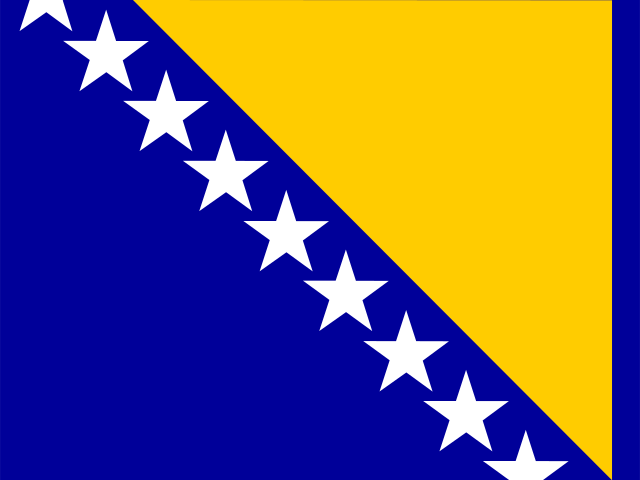
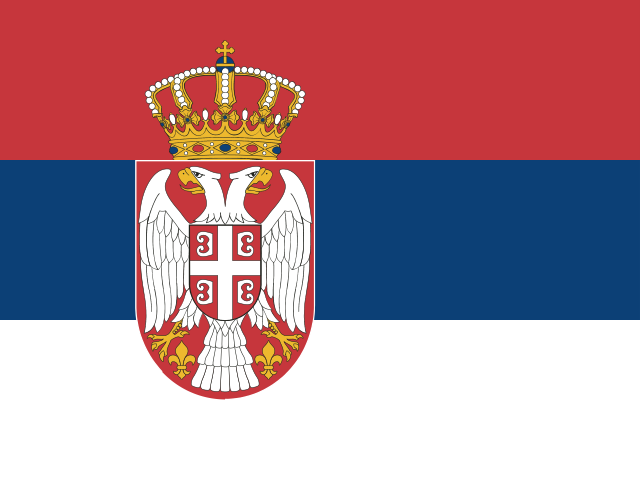
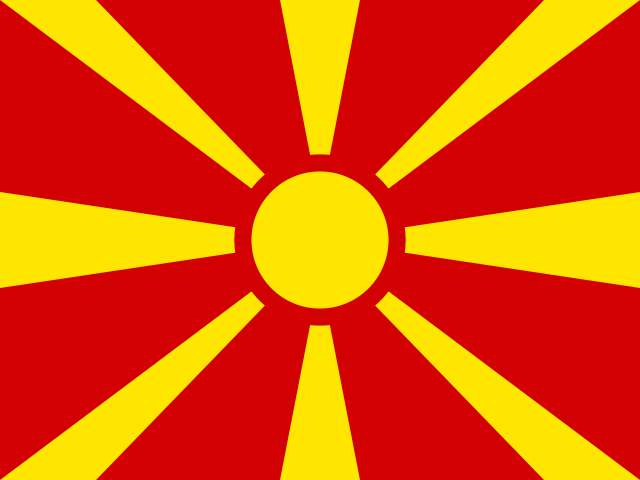
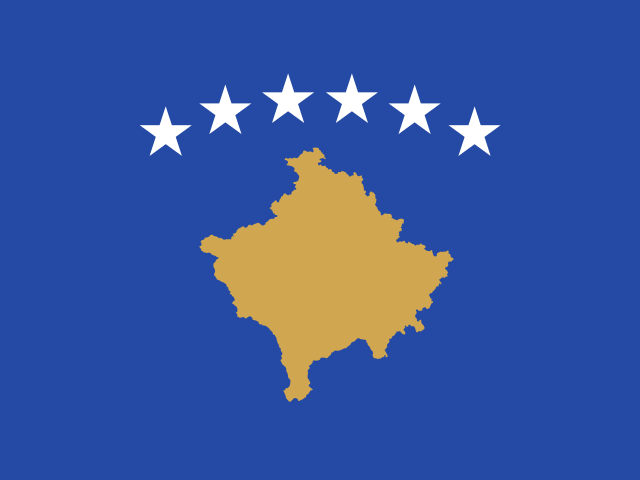
One region, several labour markets
"Recruiting from the Balkans" is a phrase that hides more than it explains. The Western Balkan countries covered here share geography and a strong vocational training tradition, but their industrial histories, education systems and migration patterns differ enough to change which profiles are realistic to find.
Bosnia and Herzegovina has depth in metalworking, machine building and construction trades, with an administrative structure that means certificates may come from different issuing institutions. Serbia has the largest and most diversified market in the region, with strong automotive supply, road transport and a mature software sector. The remaining four countries each have their own profile, and their pages follow as we can write them specifically.
What is common across the region is worth stating plainly: the same time zone as Central Europe, established migration links to German-speaking countries and neighbouring EU states, and existing exposure to European quality and documentation standards in parts of the workforce.
What is never common is the individual. Language ability, shift availability, willingness to relocate and practical skill are attributes of a person, not of a nationality. Every page on this site treats them that way, and we do not publish comparisons of national work ethic or aptitude.
What we deliberately do not publish
- Rankings or comparisons of nationalities by work ethic or ability
- Fixed visa or work permit timelines without a current official source and a review date
- Candidate numbers that we cannot substantiate with internal records and a date
- Country pages generated by swapping a country name inside the same template
- Combinations such as "Electricians from Bosnia for Germany", which serve search engines rather than employers
Frequently asked questions
The Western Balkans is six countries: Bosnia and Herzegovina, Serbia, North Macedonia, Kosovo, Albania and Montenegro. We also publish a Croatia page — Croatia is an EU member rather than a Western Balkan state, but it is closely tied to the region and often considered by the same employers. Each country page is written specifically for that labour market rather than from a template.
It depends on the country. The six Western Balkan states are outside the EU, so their nationals are third-country nationals for employment purposes and the work authorisation route depends on your national rules and the role. Croatia, by contrast, is an EU member, so Croatian nationals are EU citizens with free movement and need no work permit for EU/EEA employment.
That is not a question we will answer, because it is not a meaningful one. Countries differ in industrial specialisation, not in candidate quality. Choose the labour market whose sector profile matches your requirement, then assess individuals.
Some do, at varying levels, often through family links or previous employment abroad. Many do not yet. Language is an individual attribute that must be tested like any other requirement, never inferred from nationality.
We do not publish a figure. Processing depends on the authority, the country of employment, the role and the individual case, and an outdated number leads directly to broken start dates. Ask the competent authority for current information.
From regional overview to actual profiles
Country context helps you plan. Candidate Force is where you see which profiles are currently available.