Repair backlog
Equipment waits for repair because the mechanical team is already committed to running production.
Explore mechanic profiles for industrial equipment, vehicles, plant and assembly work.
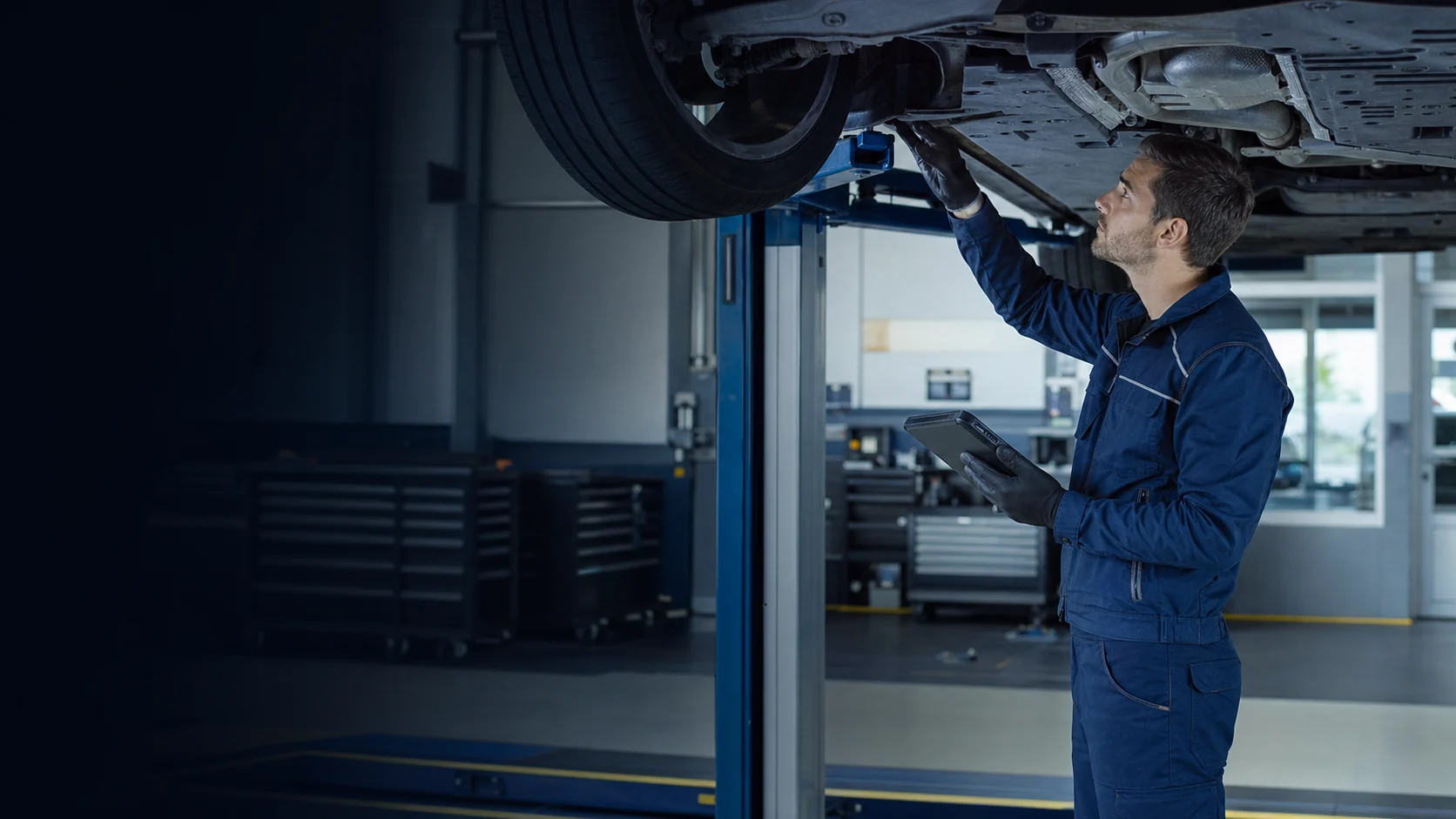
Mechanical roles are where practical skill is hardest to judge from a CV and easiest to verify with a well-designed task.
Equipment waits for repair because the mechanical team is already committed to running production.
Assembly and installation work is postponed when the crew cannot be staffed to the planned size.
Applicants describe themselves as mechanics but have worked only on one narrow equipment family.
Vehicle and machinery availability falls when servicing intervals slip.
Systems knowledge is often the deciding difference between a fast and a slow repair, and it is rarely stated in an advert.
Repairs are done but not documented, so the same fault is diagnosed from scratch next time.
Naming the equipment family in your advert filters more effectively than any seniority label.
Production machinery, conveyors, gearboxes, bearings and mechanical transmissions in plants.
Preventive servicing, wear part replacement and mechanical fault finding on operating equipment.
Mechanical assembly of machines, frames and sub-assemblies to drawing and torque specification.
Circuits, valves, cylinders, pumps and leak diagnosis on powered systems.
Excavators, loaders, lifts and site machinery, often with field repair responsibility.
Large machinery servicing with a mix of mechanical, hydraulic and basic electrical work.
Where mechanic profiles are most often needed.
Mechanical competence is demonstrable. Design one practical task and you will learn more than from three interviews.
Verify, do not assume. A qualification from the region can be excellent and still not map one-to-one onto your national framework. Ask for the document, the issuing institution and the practical scope it covers.
Balkan Candidate is where employers orient themselves. Candidate Force is where the recruitment process actually happens.
Review available candidate profiles by professional category and see what the current talent pool actually contains before you commit.
Create a free employer profile and publish your vacancy with the requirements, location and start period that matter to you.
Applications arrive in one place instead of being scattered across email threads, job boards and spreadsheets.
Compare qualifications, experience and language level, and shortlist the profiles that fit your role.
Move to contact and interviews through the plan that fits your hiring volume and internal process.
Deeper specialization content lives on our dedicated profession domains. Use them when you already know exactly which profile you need.
No. Industrial mechanics work on production machinery and mechanical power transmission inside a plant. Vehicle mechanics work on cars, trucks or plant machinery with diagnostics, service intervals and vehicle-specific systems. Both are mechanics; the equipment, tooling and documentation are different.
Send a drawing of a real sub-assembly and ask for the assembly sequence, torque considerations and likely failure points. Ask for a description of the last bearing or seal replacement they performed. Practical people answer with sequence, tools and measurements.
For assembly and machine building roles, yes — it is often the deciding criterion. For pure servicing roles, the requirement can be lower. Decide before you publish the advert, and then test exactly that.
If your equipment is hydraulically driven, state it explicitly. Hydraulic fault finding is a distinct skill and many otherwise strong mechanics have limited exposure to it.
No. We are an information resource, not an agency. Trials, contracts and employment arrangements are entirely between you and the candidate; the platform side of the process runs on Candidate Force.
Explore available mechanic profiles by equipment family and continue your recruitment on the platform.
Balkan Candidate is a discovery resource for employers. It does not guarantee employment, candidate availability or work authorisation outcomes.